Surface
Cracks, scaling, and spalls
Record the location, pattern, exposed edges or reinforcement, material loss, staining, and any visible change since the condition was first noticed.
Concrete Repair
Document the condition, intended use, access, drainage, and repair boundary before choosing a patch, panel replacement, or broader reconstruction scope.
Request a Repair Scope ReviewStart with evidence
Cracks, scaling, spalls, settlement or vertical offset, ponding, and failed prior repairs can point to different scope questions. A visual condition by itself does not establish the cause, the selected repair system, or the likely outcome.
An estimate request can record visible distress, access constraints, intended use, removal limits, and information still needed from the owner, general contractor, product manufacturer, or responsible design professional. The intake does not select a repair method or establish a written concrete scope.
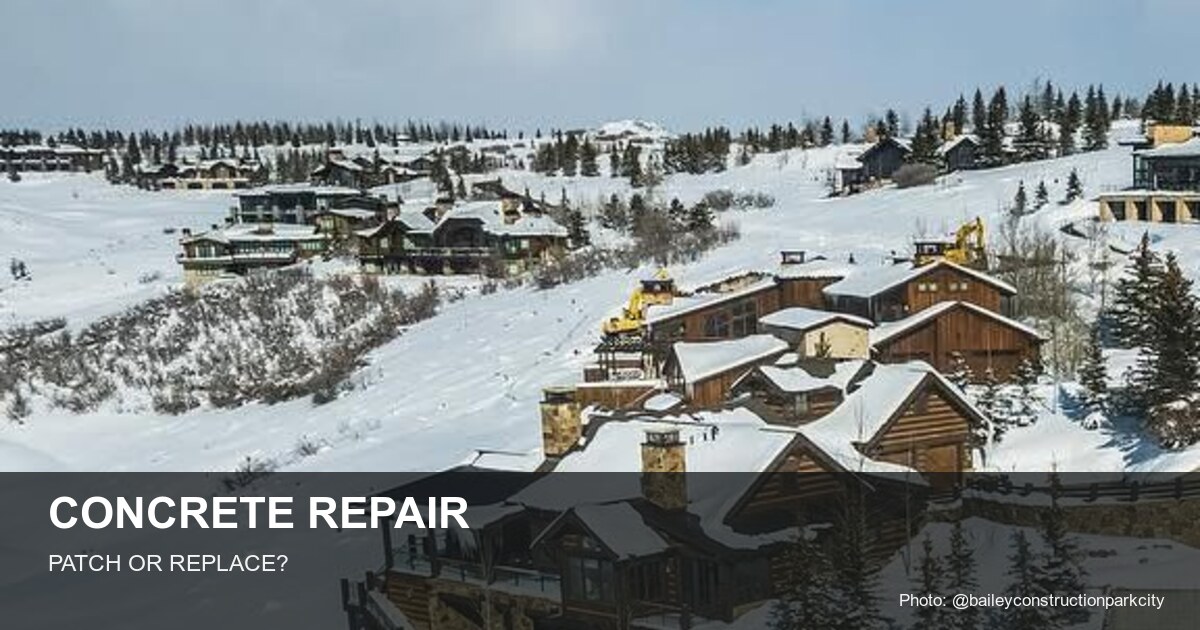
Condition record
Useful photos and notes show where the distress is, how the area is used, and which adjacent conditions may affect the work. They do not substitute for a site review or a project-specific professional evaluation.
Surface
Record the location, pattern, exposed edges or reinforcement, material loss, staining, and any visible change since the condition was first noticed.
Movement
Identify rocking panels, vertical transitions, open joints, lost support, and interfaces with steps, walls, garage thresholds, walks, or neighboring slabs.
Water
Show where rain or snowmelt collects, where it travels, and how the area connects to roofs, drains, downspouts, landscape, snow storage, and existing grades.
History
Note previous patch, coating, sealant, grinding, lifting, drainage, or replacement work and whether the earlier repair has separated, cracked, discolored, or moved.
Use
Describe pedestrian, passenger-vehicle, service-vehicle, equipment, plow, delivery, or construction traffic and any access or use that must remain available.
Site
Include equipment and truck access, occupied-area controls, utility information, adjacent finishes, landscape, snowmelt components, and work-hour constraints.
Repair or replace
01 / Localized repair
A localized repair can be reviewed when the defect and objective can be clearly described and the remaining concrete can be evaluated against the selected system's requirements. Preparation, compatibility, appearance, protection, and use restrictions belong in the written scope.
02 / Panel replacement
Panel replacement can be reviewed when distress, support, movement, drainage, elevations, or prior work makes a smaller repair unsuitable. The proposal should identify removal limits, adjacent protection, base and drainage responsibilities, approved details, finish, cleanup, and handoff.
03 / Professional review
When a wall, footing, suspended member, load path, recurring movement, or uncertain cause may be involved, the owner or GC should retain the responsible licensed design professional. A submitted condition record remains condition information without presenting an engineering conclusion, an approved repair scope, or a price.
Scope contents
A useful request separates known conditions from open decisions. Any project-specific proposal should make each party's responsibility visible before work is authorized.
Request checklist
Location
Project address or Park City/Summit County neighborhood and the affected area.
Condition
Current photos, visible distress, prior repair history, and drainage or movement observations.
Use
Intended traffic, finish objective, access needs, and areas that must remain protected or available.
Documents
Available drawings, reports, product information, HOA direction, or approved professional details.
Send the location, photos, intended use, drainage or movement notes, prior repair history, access constraints, and any available project documents. Submitting an estimate request records your project details for review. It establishes no project acceptance, response time, site visit, written scope, price, or schedule.