Builder Planning Library

Park City Concrete Resources for Builders and GCs

Twenty practical guides organized around the concrete decisions a Park City builder or general contractor needs to coordinate from early scope through next-trade handoff.

How to Use This Library

A planning index, not a project specification

Use these guides to prepare questions, compare written scope, and identify coordination inputs. They do not establish engineering, code requirements, pricing, schedules, contract terms, inspection acceptance, or project-specific scope. Approved plans, responsible design professionals, product instructions, governing authorities, and the executed contract control each project.

Topic 1 of 7

Scope and Handoffs

Use these guides to organize bid inputs, responsibility boundaries, field coordination, and the information that should travel with the concrete scope.

Topic 2 of 7

Foundations and Footings

Review the project-document, frost-depth, inspection, sequencing, and site inputs that affect foundation and footing coordination.

Topic 3 of 7

Drainage and Existing Conditions

Start with observable conditions, water movement, support, and repair objectives before comparing restoration or replacement scopes.

Topic 4 of 7

Flatwork and Slab Scope

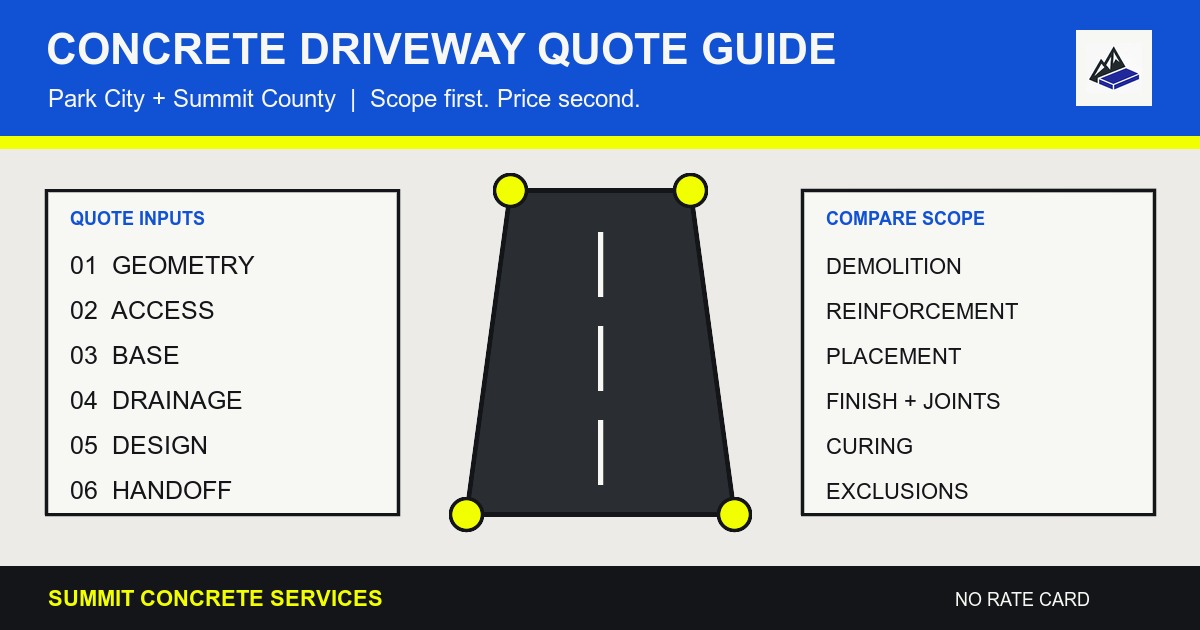
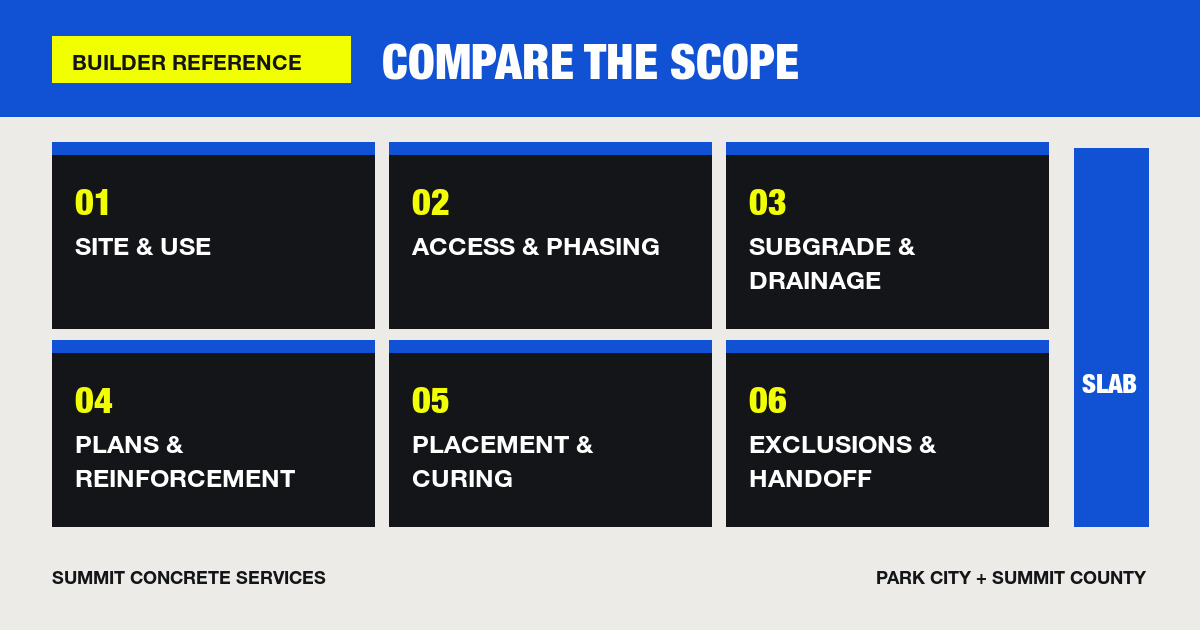
Compare intended use, plan references, base, access, finish, curing, protection, exclusions, and closeout without relying on generic pricing or details.

Topic 5 of 7

Access, Staging, and Serviceability

Use current site and route information to plan mobilization, delivery access, staging limits, jurisdiction checks, and field-team fit.

Topic 6 of 7

Removal and Cleanup

Define demolition limits, protection, haul-off, base exposure, and the condition required before replacement work or the next trade begins.

Topic 7 of 7

Schedule and Trade Readiness

Coordinate site preparation, placement windows, curing, protection, inspections, and handoff milestones around the current project schedule.

Bring the Current Project Documents

Share the site address, jurisdiction, current plan revision, concrete scope, access constraints, and target sequence for a project-specific site and scope review.